
System Calibration & Safety Testing
Certified instrumentation calibration, hydrostatic pressure testing, and critical valve safety audits. Boiler Techniques delivers meticulous calibration sweeps across pressure transmitters, temperature loops, and safety relief mechanisms. Our field testing verifies structural integrity profiles to avoid instrument drift, stabilize production parameters, and assure legal compliance frameworks.
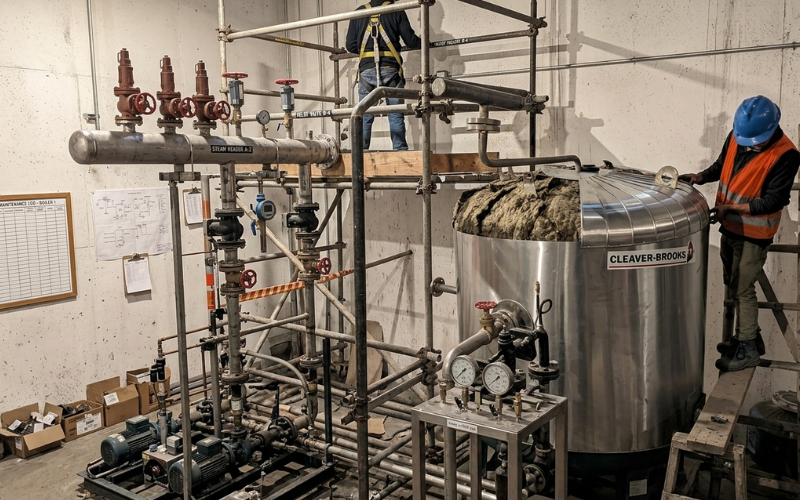
Undetected instrument calibration lag compromises burner performance metrics and masks underlying process hazards. Our certified technicians apply precise laboratory-grade signal simulation and hydraulic pressure blocks to verify indicator tolerances down to nominal design standards. We systematically test overpressure lift thresholds, ensuring your heavy equipment triggers immediate pop-offs right when critical thresholds are breached.
Our annual safety clearance was up against strict regulatory compliance checkpoints. Their comprehensive hydrostatic pressure testing, gas valve leakage verification, and certified instrument calibration cleared our system without a single citation.
Tariq Javed Chief Safety Compliance Inspector
Testing Compliance
Calibrated instrumentation loops safeguard utility environments from dangerous high-pressure excursions while documenting formal corporate safety validation records.
- Hydrostatic verification proves shell boundaries under extreme pressure.
- Safety valve lift testing guarantees instant emergency relief.
- Traceable instrument certificates satisfy annual inspection mandates.